


China is so vast that there is no single best time to travel – each season has its own unique scenery. This guide will tell you when to go where, what to see, and what to pay attention to.
China Seasonal Overview Table
| Season | Best Recommendation | Month | Weather and Visitor Flow | Best Features |
| Spring | ★★★★★ (Best) | March–May | Warm and pleasant, late March–early April is the peak season for flower viewing | All kinds of flowers are in bloom, including cherry blossoms, peach blossoms, and rapeseed flowers. |
| Summer | ★★★ | June–August | Most of the country is hot; July and August are the peak tourist season. | Escape the heat and enjoy the cool climate in highlands, grasslands, and beaches. |
| Autumn | ★★★★★ (Best Choice) | September–November | Comfortable temperatures (10–22℃), mid-to-late October offers the best value | Red leaves, colorful forests, ginkgo trees, golden terraced fields |
| Winter | ★★★ | December–February | Off-season in the North (except for Chinese New Year), peak season in Hainan/Yunnan | Ice and snow wonders vs. warm sunshine in the South |
I. Spring (March–May) – A tapestry of blooming flowers(Best time)
Spring is one of the most pleasant seasons in most parts of China. However, it is also one of the peak travel seasons in China, with late March to early April typically being the peak travel period. After April is a good time to travel during off-peak times.
Spring Featured Destinations
- Wuhan (late March – early April): Wuhan University and East Lake Cherry Blossom Garden are top destinations for cherry blossom viewing in spring, and Wuhan ranks first among the top ten popular destinations for spring flower viewing.
- Wuyuan (March): The terraced fields of Jiangling and Huangling in Wuyuan, Jiangxi Province, covered with golden rapeseed flowers, are a springtime depiction of China’s most beautiful countryside.

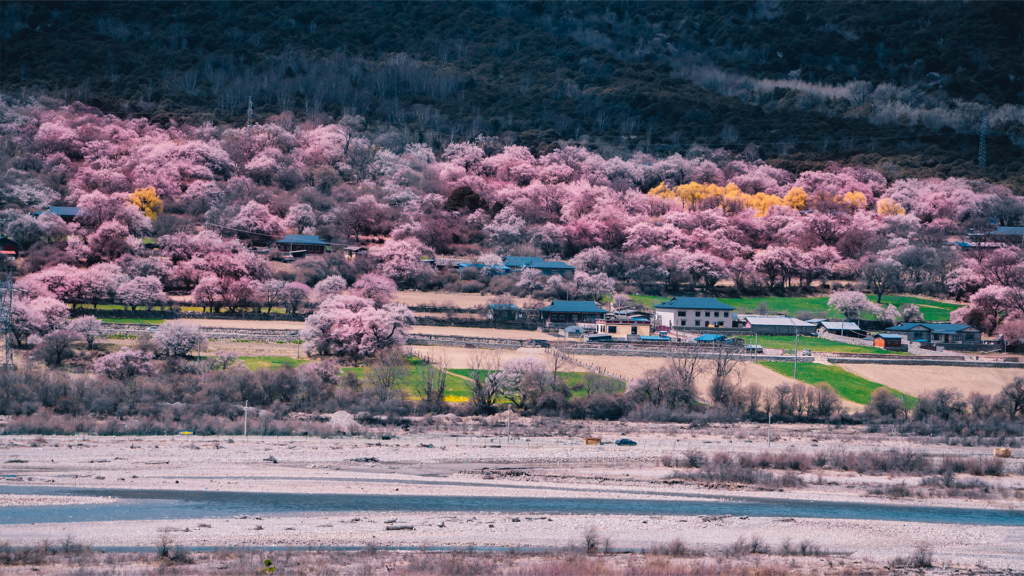
- Nyingchi (late March – mid-April): Peach blossoms bloom under the snow-capped mountains in Nyingchi, Tibet. In Bomi area, the peach blossoms are in full bloom as early as mid-March, while in high-altitude areas they can last until mid-April.
- Guilin and Zhangjiajie (April–May): In April, the Li River in Guilin is shrouded in mist and rain, and the landscape is picturesque; in May, thousands of sandstone peaks in Zhangjiajie rise from the lush forests, shrouded in morning mist, like a fairyland.
If you dislike the heat but still enjoy some of China’s famous tourist attractions, spring is the best time to visit. During this period, you can travel to places like Beijing, Xi’an, and Shanghai to see attractions that require hiking.
Spring weather is changeable with large temperature differences between day and night, so layering is recommended. Late March to early April is the peak season for flower viewing, so popular attractions will be crowded; it is advisable to book hotels and tickets in advance.
II. Summer (June–August) – A Paradise for Escaping the Heat
Summer is the hottest season in most parts of China, especially in the “Four Furnaces” cities of Chongqing, Wuhan, Nanjing, and Changsha. However, this is also the best time to escape the heat by visiting high-altitude areas, northern grasslands, and coastal cities.
Summer is also the peak tourist season in China, with a surge in family trips during students’ summer vacation (June–September).
Recommended destinations
- Qinghai Lake (July–August): It’s cool, the rapeseed flowers along the lake are in bloom, and you can cycle and take pictures of the “Mirror of the Sky” at Chaka Salt Lake.

- Jiuzhaigou (July–August): The water is exceptionally clear, there are many waterfalls, the forests are lush, and it is an excellent place to escape the summer heat.

If you are interested in Jiuzhaigou, you can find out what you can do and how to enjoy it by referring to the Chengdu High-Speed Rail Guide to Jiuzhaigou & Huanglong.
- Qingdao / Dalian (June–August): Seaside cities, enjoy seafood and sea breeze, Qingdao also has old European-style buildings.
- Yili, Xinjiang (June–July): Lavender fields at the foot of the Tianshan Mountains resemble Switzerland.
If you are visiting China in the summer, you can first choose Guilin, Guizhou, Daocheng Yading, etc., to see China’s landscapes and experience the unique coolness of summer.
Note: High-altitude areas (Qinghai, Tibet, Western Sichuan, Yunnan) experience large temperature differences between day and night; even in summer, a warm jacket is necessary.
July and August are the peak tourist season; popular scenic spots are extremely crowded, and transportation and accommodation prices are high. It is essential to book several months in advance.
III. Autumn (September–November) – A Feast of Colors(Best time)
Autumn is the best season to visit China! From September to October, temperatures are comfortable in most parts of the country (approximately 10°C–22°C / 50°F–72°F). Considering the weather, scenery, and crowds, April, May, September, and mid-to-late October are the most recommended months to travel.
Recommended destinations
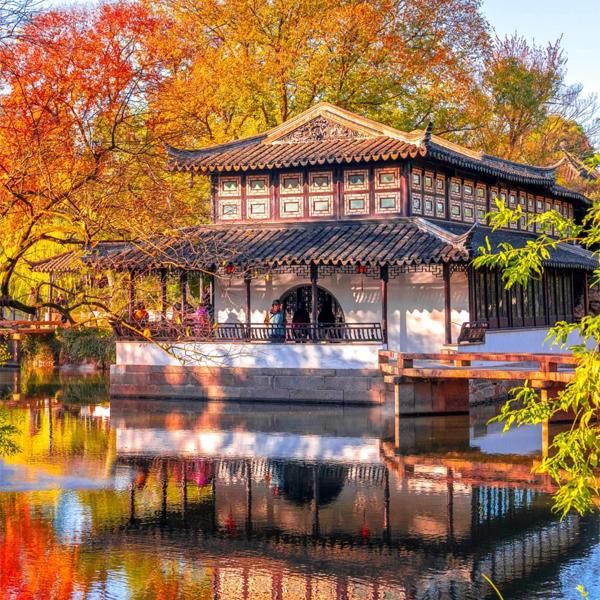
- Suzhou (late September–early October): The gardens in Suzhou are as beautiful as fairytale towns.
- Western Sichuan (mid-October): Jiuzhaigou, Daocheng Yading, etc., with red leaves, colorful forests, and clear waters, autumn is the most photogenic time of the year.

- Beijing (mid-to-late October): Ginkgo trees and red leaves make the Forbidden City and the Great Wall look especially beautiful, and the red leaves of Fragrant Hills are a classic sight.

A Beijing travel guide is available here:Beijing Travel Guide: Attractions, Food & Tips
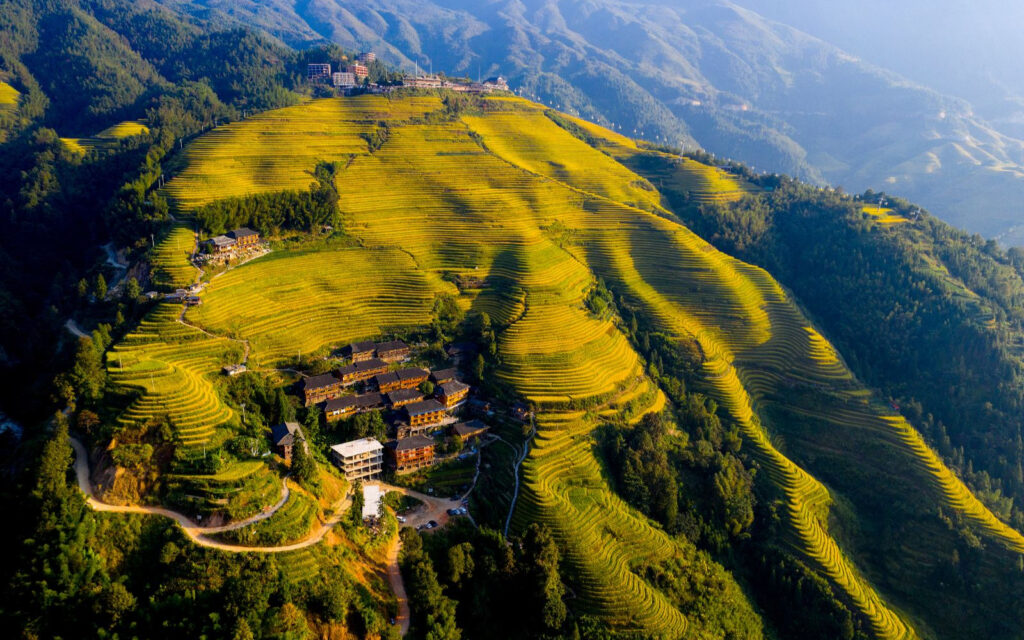
- Guilin: In the golden autumn season, the rice ripens, and the terraced fields resemble golden steps, making the sunrise and sunset the most beautiful times.
Besides the places mentioned above, the weather is comfortable wherever you want to go in autumn. You can also visit Zhangjiajie, Tibet, Xi’an, Guizhou, Shanghai, and other places.
October 1-7 is China’s “National Day Golden Week”. It is strongly recommended to avoid traveling during this week. The middle and late October is the most cost-effective time to travel.
IV. Winter (December–February) – A Symphony of Ice and Snow and Warm Sunshine
Winter in China presents a striking contrast: the north is a fairytale world of ice and snow, while the south is a warm and comfortable haven from the cold (such as Guangzhou and Hainan). Winter is the off-season for travel in China (except for the Spring Festival holiday), with fewer tourists and more affordable prices.
Where to go & what to do
- Harbin (December–February): A world of ice and snow sculptures, and old Russian-style buildings, reminiscent of Frozen.
- Changbai Mountain / Jilin (December–February): Skiing, or see Jilin’s “rime ice” (trees covered with ice crystals).
- Sanya (December–February): While the north is below freezing, here it’s 25°C. Swimming, diving, and sunbathing are like living in a completely different world.
- Yunnan (December–February): Dali and Lijiang are sunny, while Xishuangbanna is warmer and offers views of tropical plants.

- Guangdong (December–February): While the north is blanketed in snow, most of Guangdong remains warm and spring-like, with average temperatures around 15°C–22°C, making it an excellent “warm winter” destination.
In winter, you can also experience China’s traditional festival – the Spring Festival. However, please note that winter is peak tourist season in places like Hainan and Yunnan, so advance booking is recommended.
Travel Tips
1. Payment
- Before traveling abroad, download Alipay or WeChat Pay and link your Visa/Mastercard credit card. Once in China, you can pay by scanning the QR code; the exchange rate will be automatically calculated.
2. Network
- Purchase a reliable paid VPN in advance and install and test it before leaving your country. Free VPNs are mostly unstable.
- If your phone supports eSIM, you can buy a roaming eSIM data plan from a Hong Kong or Singapore operator (such as Airalo or Nomad) before traveling abroad. These plans usually use overseas networks and allow direct access to foreign websites. Activate it after arriving in China.
3. Navigation and ride-hailing
- Google Maps is unusable in mainland China (inaccurate location tracking, outdated map data). We recommend using a local map service and downloading the international version of Gaode Maps beforehand.
- Didi Chuxing (DiDi) is China’s largest ride-hailing app, supports linking foreign credit cards, and has an English version.
4. Visa and Entry
- Most tourists need to apply for a tourist visa (L visa) to enter China in advance. Applying at least 4–6 weeks in advance is recommended.
- Some countries (such as Singapore, Japan, Brunei, etc.) offer visa-free entry for up to 15 days. Please confirm whether your nationality is on the visa-free list.
- 72/144-hour visa-free transit: If you fly from country A to China and then to country B, you can stay visa-free for 72 or 144 hours in more than 20 cities including Beijing, Shanghai, Guangzhou, and Chengdu.
5. Safety and Health
- Major Chinese cities are very safe for tourists, with low street crime rates. Walking the streets late at night is generally worry-free.
- Food: Street food is tempting, but if you have a sensitive stomach, try eating at proper restaurants for the first few days to get used to it. For spicy food (Sichuan and Hunan cuisine), you can ask for “not spicy” (bù là).
Your China Trip
For first-time visitors to China, the best time to travel is based on your available time, as China’s attractions offer different kinds of beauty in different seasons. If you are unfamiliar with China, please contact us; we can customize a unique travel itinerary for you based on your interests and preferences.
Recommended classic itinerary
10-Day Guizhou Private Tour: Nature & Culture Wonders
5-Day Beijing and Xi’an Private Tour
Chengdu 5-Day Private Tour: Explore Pandas, Culture & Cuisine


